Some time ago, when talking with friends about our capacities to indulge the suspension of disbelief for fictional narratives, ███ revealed that she has never been able to watch Sex and the City (1998–2004) because the characters’ financial viabilities give her too much anxiety. Carrie Bradshaw’s primary employment is writing a weekly newspaper column. She later becomes a freelance writer. How could she possibly afford to live the life she lives? And in NYC, of all places? In response, ██████ said that she can’t watch The Lord of the Rings films (2001–03) because they trigger her agoraphobia. The hobbits travel impossibly far from the safety of their home. How can we believe they could ever make it to Mordor alive? Let alone there and then back to Hobbiton?
I have to admit, I haven’t ever followed Sex and the City very closely. For a while, my friend █████ was rewatching her DVD box set of the series in the evenings after work when we lived together. I liked joining her to watch it and enjoyed hearing the series’ theme song punctuating our weeknights at home, but I’ve never sought it out on my own. I also have to admit, I don’t have much time for The Lord of the Rings these days. While I read the books in high school and used to be a fan of fantasy as a genre, it’s much too epic for me now. I have other things to worry about.
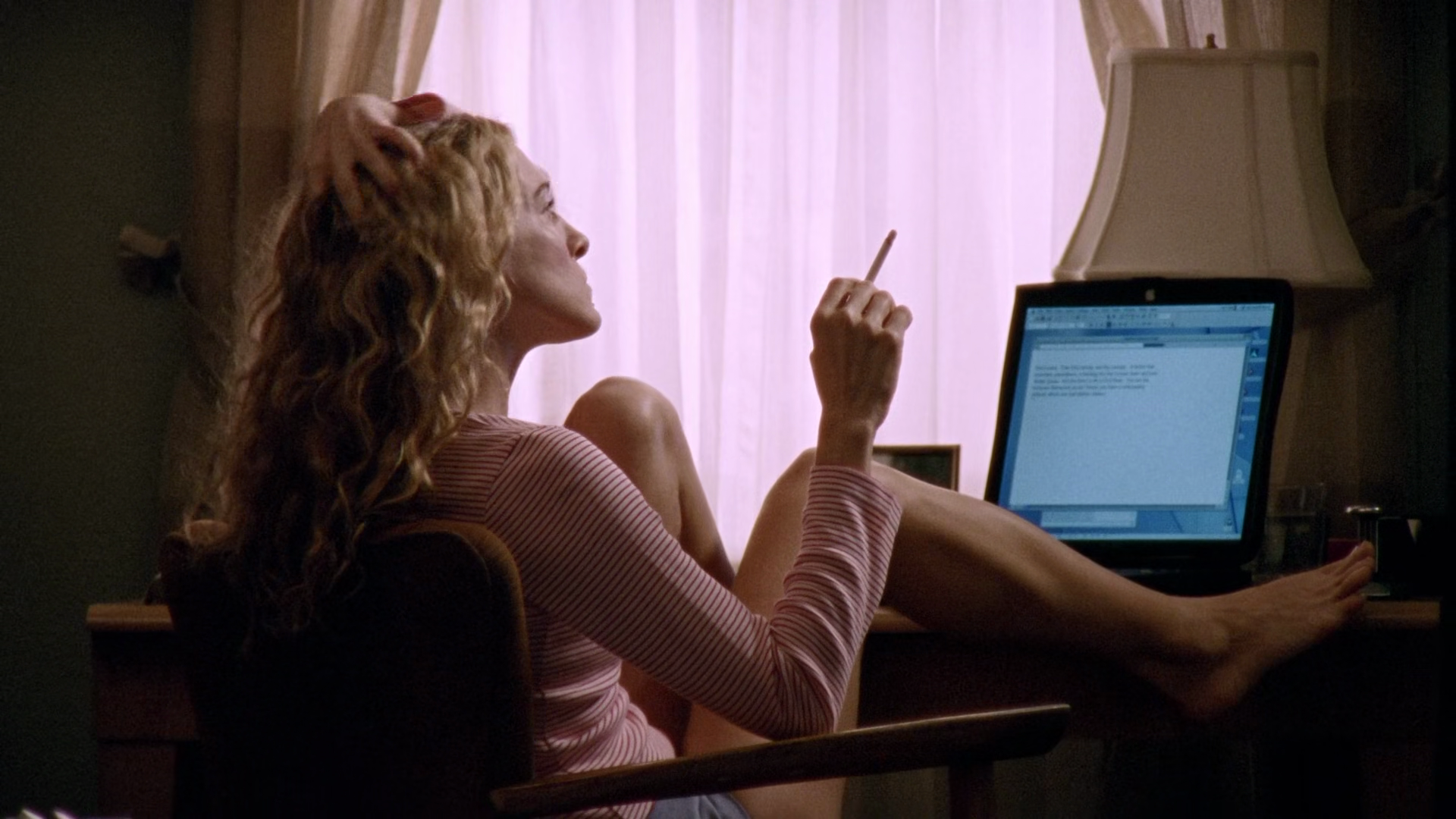
According to an entertainment news article from 2019:
- Carrie—with her expensive habits of high-end shopping, drinking, dining out, and taking taxis—wouldn’t have been able to afford to live in Manhattan as a columnist (with an estimated salary of US$50,000), even in her rent-controlled apartment;
- Miranda—the most hardworking and frugal of the four friends, whose major expenses would be her mortgage, cleaning lady, and reliance on takeaway dinners—could not only have afforded her lifestyle portrayed onscreen as a law firm partner (with an estimated salary between US$300,000 to $500,000) but could have afforded to live a considerably more extravagant life;
- Charlotte—advantageously coming from a wealthy family—wouldn’t have been able to afford to live her life as an art dealer in NYC (with an estimated salary of US$61,000) if she hadn’t married into money twice, first to a heart surgeon and then to her divorce lawyer; while
- Samantha—the owner of both an Hermès Birkin bag and an apartment in a trendy neighbourhood—could have been in a tremendous amount of debt to afford her expensive tastes and lifestyle, even as the director of her own public relations firm (with a very roughly estimated salary of US$140,000, although it could have been significantly more or less).
Today, speculation regarding the financial affairs of others (however real) is par for the course, occurring frequently among millennials and younger generations. My man! How much is your outfit worth? Driven by ever-increasing wealth and income disparities, along with generational aspirations, such scrutiny is exacerbated by the flattening effects of Web 2.0 media and its creation of the ideal conditions for social comparison and competition. How much do you pay for rent? How did you afford your car? Narratives concerning the upper class being punished are buoyed in the media. Grifter stories become screen adaptations. What do you do for a living? How much money do you make a year? Not only do we want to know how much money you have, but we are also demanding to know where it came from. Who or what was exploited? How long ago? Who has benefited? Will suffering ever end?

Naturally, this obsession with the means of others isn’t missing from the art world. A new friend, ████, reveals to me that it is “rich kids” running an art space with an appropriated grunge aesthetic from the garage of an inner-city Naarm/Melbourne share house owned by one of their parents. She complains of the performativity of others, shoplifting expensive bottles of wine to drink at exhibition openings. Over drinks with friends, we wonder how some people can afford their art practices, high-end fashion, overseas travels, and property when we cannot. People who have received considerable amounts of money from arts funding or private philanthropy will still speculate on the financial viability of others. It is never enough. We are shocked to learn how much some people are paid compared to others within the same workplace, considering relative qualities and quantities of labour. As we know, the playing field is not level.
In 2019, when the American conceptual artist Joseph Kosuth visited Boorloo/Perth, an opportunity arose to meet with him for dinner and drinks as part of a small group of early to mid-career artists. Here to sell the potential of a privately commissioned public neon artwork for the new museum, his tired hosts had found in us an opportunity to be relieved of the responsibility of entertaining him for an evening. Around self-mythology and tales of the NYC art world from the 1960s and ’70s, Kosuth managed to offend almost everyone he met, coming across as rude, demanding, and problematic. He mentioned living between his two homes in New York and London and being a member of three social clubs. When talking about making editions and variations of the same works ad infinitum, he maintained with a wink that, like each of us artists present, he is also an underdog, working against the system by tricking the man for his benefit.
As reported by an Australian National University poll on social class in Australia from 2015, of a randomised survey of 1,200 Australians, 52% self-identified as middle class, 40% as working class, and 2% as upper class. In a more recent ANU study from 2019, of a randomised survey of 2,584 Australians, 92% of respondents claimed to be among the middle 60% of income earners, while 50% ranked themselves in the middle 20%. As suggested by similar research from other countries, such misperceptions are to be expected, with people tending to underestimate the level of inequality in their country, overestimate the degree of upward mobility, and believe that they are in the middle of the national income distribution regardless of how rich or poor they are.
Once again, I am thinking of German filmmaker, artist, and writer Hito Steyerl’s essay “In Defense of the Poor Image” (2009), which has only become more relevant to me with the passing of time. Describing the translation and deterioration of media necessary for its digital transmission under the neoliberal commodification of culture, she writes:
The poor image is a copy in motion. Its quality is bad, its resolution substandard. As it accelerates, it deteriorates. It is a ghost of an image, a preview, a thumbnail, an errant idea, an itinerant image distributed for free, squeezed through slow digital connections, compressed, reproduced, ripped, remixed, as well as copied and pasted into other channels of distribution.
Beyond the “poor image”, we are living and working in a time of deteriorated aesthetics, in which both the production and reception of culture exist under increasingly impoverished conditions (i.e., by definition, where it is “made poor” or “deprived of strength or vitality” through various circumstances, whether social, economical, or political). Not only do we now frequently lack the resources (time, money, energy, space, etc.) necessary to comfortably produce significant and high-quality works of culture as producers, but, more often than not, we do not have the resources available to us as individuals and audiences to adequately engage with the superabundance of cultural production, even on a small scale.
Considering the immaterial labour of busyness, Belgian-born writer, editor, and curator Dieter Roelstraete describes our current condition in his essay “The Business: On the Unbearable Lightness of Art” (2013):
[I]f anything characterizes the self-image of artist, critic, and curator alike—and one could of course also add the arts administrator, art teacher, gallerist, studio assistant, and so forth to this ever-expanding art-world family—it is the shared assertion that we are always working, indeed that “we are working too much.” What we mean, of course, is that we are busy, and what we really mean when we are referring to the art business, whether as a peculiar province of “showbiz” or not, is quite literally this oceanic sensation of always being busy.
Discussing the various forms of being busy that occupy much of our already limited time, he writes:
And because all of this is done in the studio or in the office as much as at home—it is another structural feature of the contemporary art world, of course, that these demarcations no longer matter much anyway—the following are mixed into the dizzying maelstrom of general business: arranging for either a cat- or babysitter—subletting—keeping a watch on three different bank accounts—indeed, getting one’s taxes in order!—thinking about going to the gym—keeping an eye on one’s diet—catching up on reading, some of which will doubtlessly feed into an as-of-yet-unknown project—Skyping with your mom. In short, as the immortal Travis Bickle put it in Taxi Driver, “getting organizized” (one never “is” organizized). Indeed, who in his or her right mind would have time still, in this never-subsiding gale of faintly art-related activity, to work—make that artwork, curate that exhibition, teach that course, write that piece? Managing one’s career, administering one’s project, or just running one’s life—that’s what an overwhelming amount, indeed the vast majority, of work-like activity revolves around these days, as opposed to actual artistic, cultural, or intellectual production—and claiming that managing one’s career and/or administering one’s project is now an art form or a type of artistic production in its own right does not alter the fundamental imbalance that I take to be the root cause of the unbearable lightness of so much current art.
How might we resist?
A little into the development of this work, I was feeling tired and was thinking about capacity and refusal. I still am. I revisited an essay that some friends and I read and often referenced in conversation a while back: German art critic and writer Jan Verwoert’s “Exhaustion & Exuberance: Ways to Defy the Pressure to Perform” (2008). Commissioned for a pamphlet accompanying an art festival subtitled Yes, No & Other Options, and since republished in numerous other places, the text considers care and capacity under the norm of high performance, asking, “How could we collectively realise the freedom and demands of I Can and I Can’t in the key of I Care and claim the right to create the conditions for a better life for everybody?”.
Thinking about uncooperativeness as an act of resistance, Verwoert asks:
Why does it take other people to stop us from performing in the first place? Why do we not dismiss the need to perform of our own accord? What can make us utter the magic words I Can’t? Does it take a breakdown to stop us? Does the utterance of the words I Can’t already constitute or confirm a breakdown, a failure to perform, justifiable only if our body authenticates our incapacity by refusing to function? How could we restore dignity to the I Can’t? How could we avoid becoming backed into a corner where the I Can’t would merely be perceived as a passive-aggressive stance of denial? In other words: How can we embrace the I Can’t without depriving ourselves of our potential to act? Could we unlock the I Can’t as a form of agency?
Included in Ghislaine Leung’s second exhibition, Balances at Maxwell Graham/Essex Street, New York (8 September – 15 October 2022), the work Times (2022) consists of the following score: “Access to exhibited works is limited to the studio hours available to the artist. Thursday 9AM-4PM, Friday 9AM-4PM. The exhibition space may remain open during regular hours.” In another work from the exhibition, Hours (2022), the artist’s studio time, unencumbered by the demands of child care and teaching, is represented visually by another score: ”A wall painting the size of the artist’s home studio wall divided into all the hours of the week with the portion of studio hours available to the artist marked in black. Thursday 9AM-4PM, Friday 9AM-4PM.” Outside of the restricted viewing hours designated by the artist, the gallery maintained its usual hours, but the wall painting was covered with sheets of paper, and the other works were removed from display.
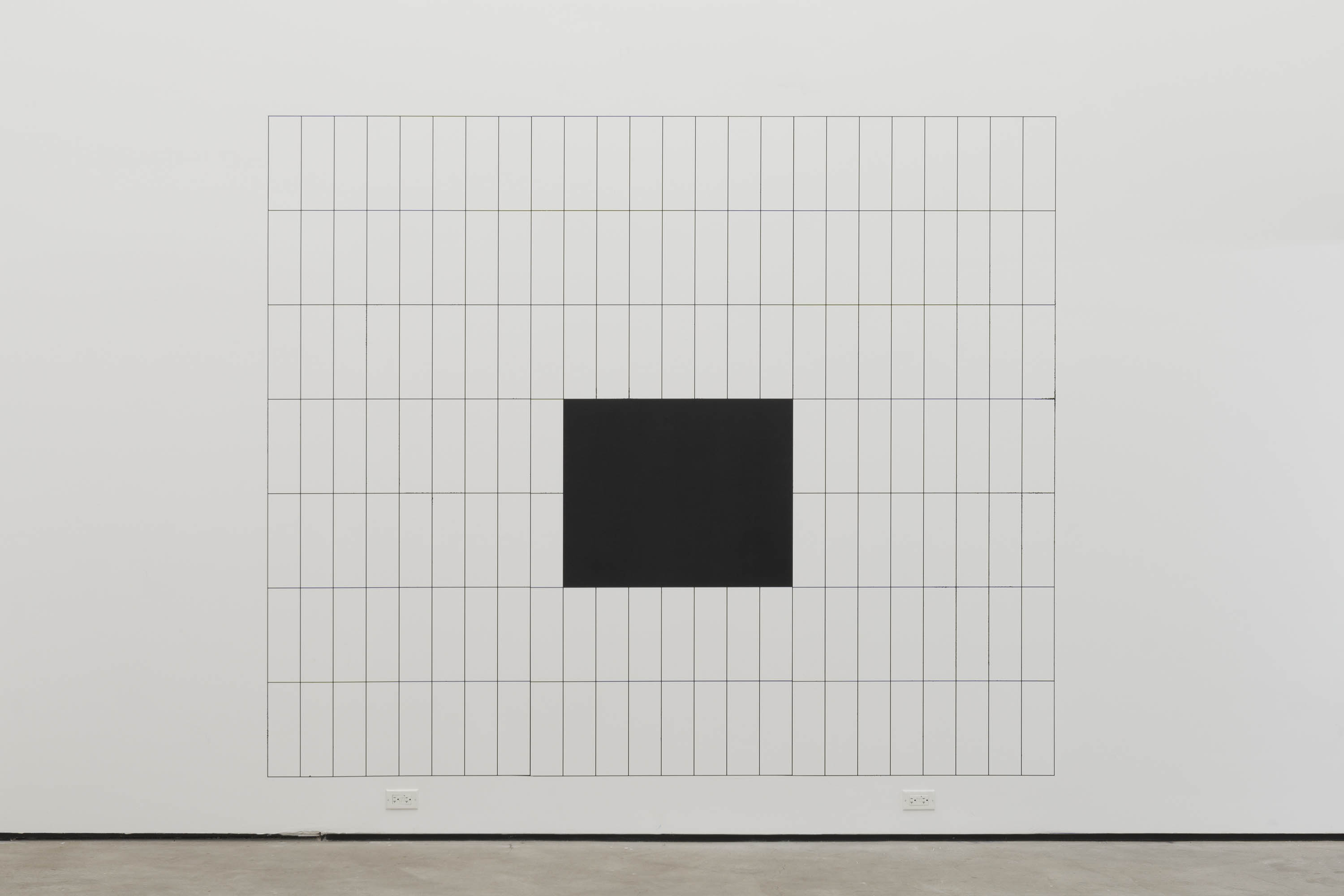
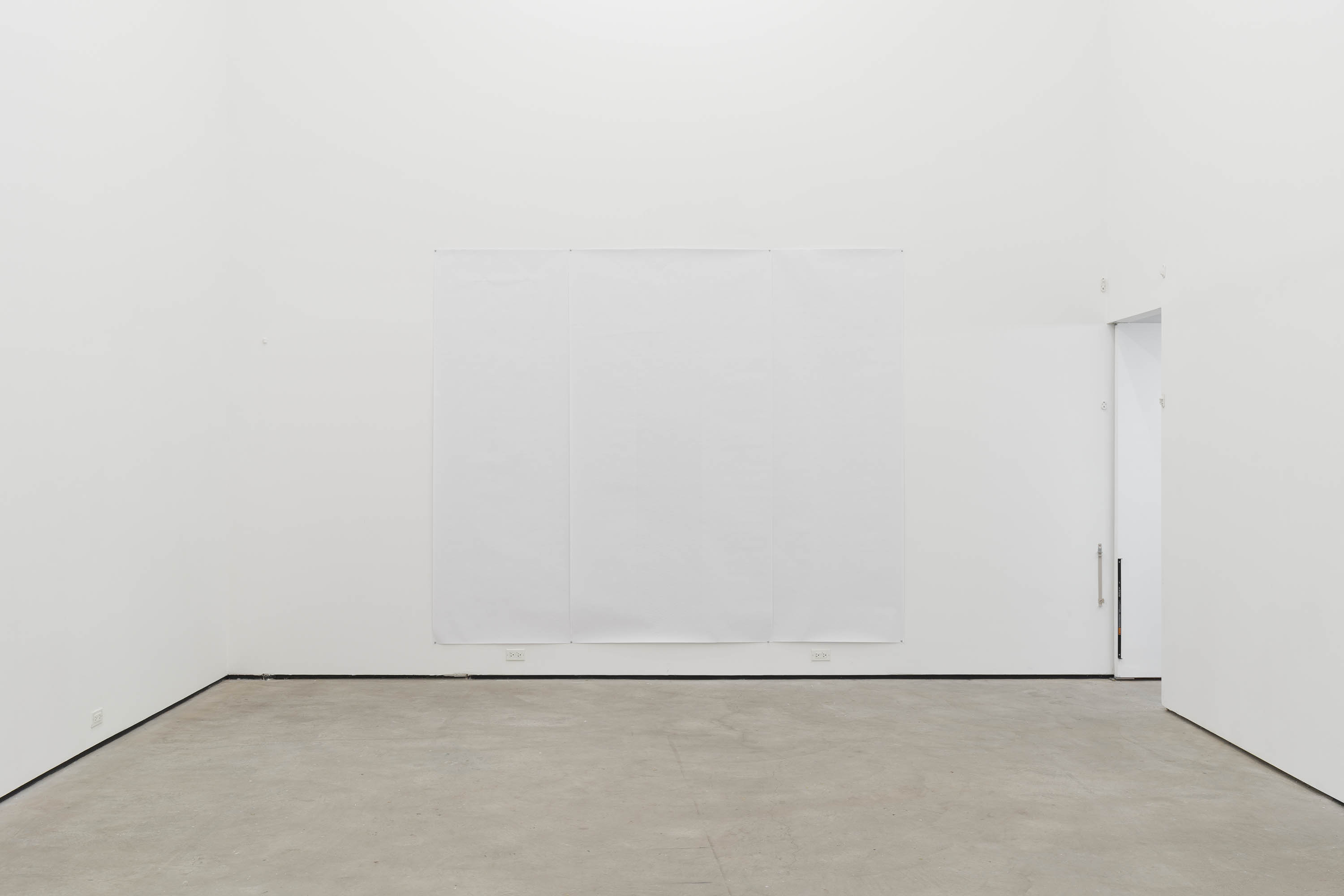
Correspondence between Leung and her gallerist from the development of the exhibition further contextualises these works within the press release:
I feel unable to make the new works requested of me because I do childcare evenings and weekends, and weekly. I do this childcare not in spite of my work as an artist but as an active and empowered choice to be a mother. As a mother and artist, committed to my child and committed to my art, I am able to work a fraction of the time assumed by societal models that preclude care work. In this time I also teach art, to afford to live and to pay for the childcare that allows me to make my art. I do not wish to drop out from my art, I do not wish to entirely outsource care for my daughter. I wish to do both art and care and in doing so change the terms of identity and labour within our industry.
Concluding the exchange, she emphasises:
That I am unable to meet demand is the affirmation of a resistive choice as a mother and artist. But I don’t find that at all easy. My desire to mask my situation is a disadvantage to the understanding of the work, and our mutual ability to understand and advocate for the work. To reflect on the constitutive means of production available to, not just me, but many artists navigating jobs and lives.
I am reminded of another example of unlocking the I Can’t as a form of agency from not too long ago …
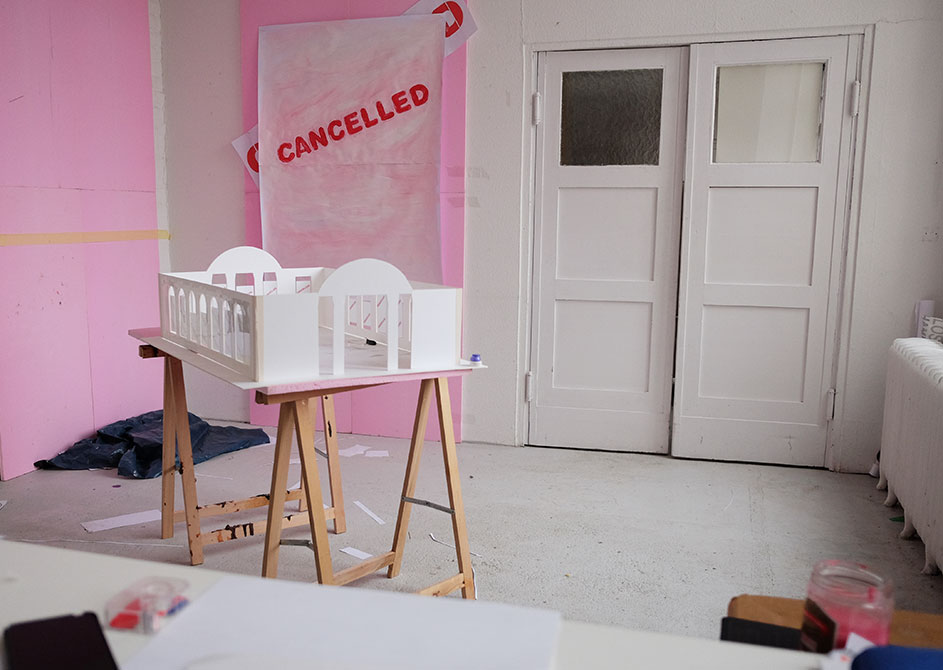
After months of development for a solo exhibition scheduled to open in May 2017 at the Gallery of Modern Art in Glasgow, Dutch artist Marlie Mul decided it was necessary to cancel her exhibition. With mounting frustrations concerning poor communications over practical queries; proposals being knocked back for being deemed too “rude”, “offensive”, or “pornographic”, if not for vague technical or “health and safety” reasons; and a lack of confirmed parameters to work within, not limited to the disclosure of an exhibition budget and artist fee; Mul was becoming more and more anxious as the deadline approached that it would not be possible for the show to happen. The extent of deep-rooted problems in the museum’s administration soon became apparent when the curator who had invited her to show resigned.
Rather than cancel the exhibition outright, with the potential for a last-minute production to replace it, Mul’s proposal required that the cancellation be advertised using the usual external banners with the word “CANCELLED” added to them, hoping to expose the institution’s problems by making them visible to the public. Inside the gallery, billboards featuring photos of a model the artist had made of the gallery and advertising the exhibition’s cancellation would be mounted onto the large windows. Additionally, at the suggestion of Mul, the museum initiated a public call for proposals to use the space in alternative ways throughout the five-month duration of the exhibition. Further incompetency on behalf of the institution resulted in the removal of approved information contextualising the cancellation in light of “impossible working circumstances”, leaving visitors confused as to what was going on and why.
Writing for Poetry Foundation’s blog Harriet in 2011, American poet and writer Eileen Myles recounts an anecdote told to them:
[John Curl] told Oscar [Tuazon] that the poets in San Francisco had this joke about the poet’s strike. The idea being to stop writing poems to resist the war. The joke was that nothing would happen. It seemed like a stoner joke. But Oscar said to John well you’d just do something else. That seemed like the crux of the matter to me. That you would NOT put your energy into poetry but put the poem, the drive to it, the whole apparatus we gleefully deposit in the poetry world and bring that something somewhere else.
They elaborate on the potential for actualising such a strike:
One thought is imagine going up to the Whitney with a gang (on May 1, a Sunday) and maybe handing out flyers explaining that I am not writing poetry today but I am willing to talk about the situation with corporations not paying their taxes.
Considering bringing “that something somewhere else”, German artist Maria Eichhorn offers us another example …
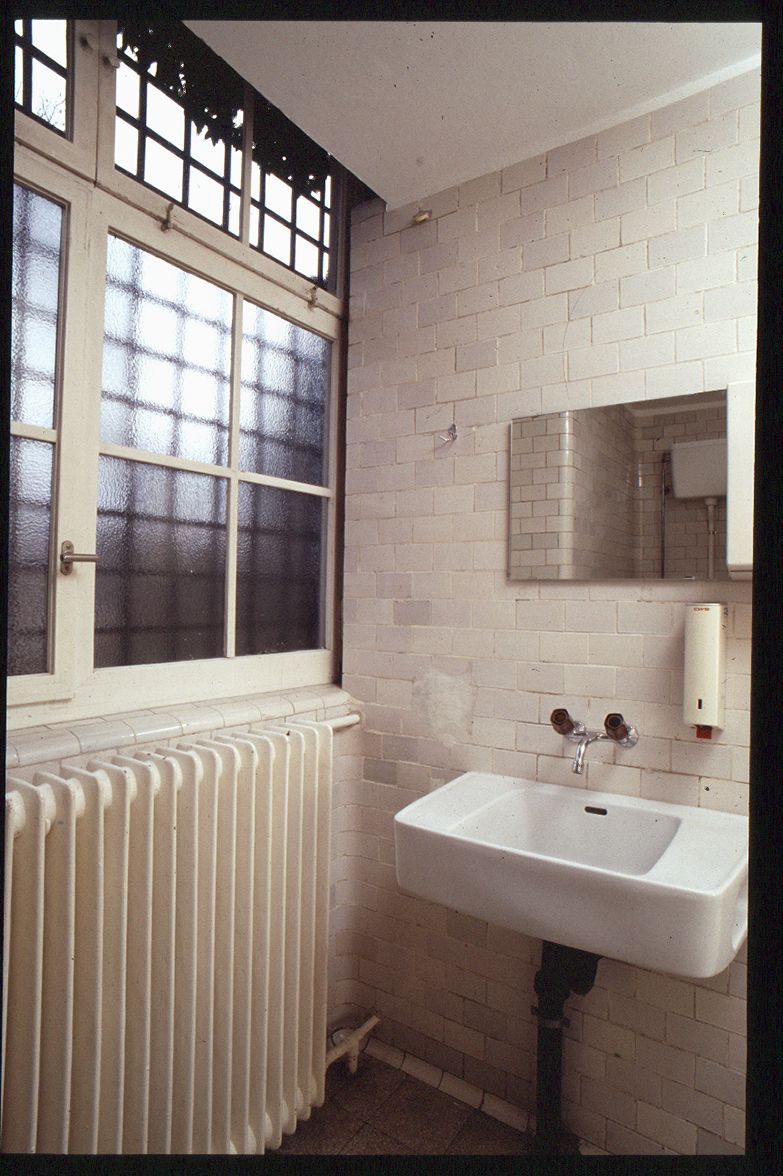
For the three-part project Money at the Kunsthalle Bern (27 October – 9 December 2001), Eichhorn produced an exhibition, a two-volume publication, and an edition. Using her exhibition budget, the artist paid for a series of overdue repairs and renovations for the building that otherwise would not have been possible due to a lack of funding: fixing leaky skylights, plumbing, uncomfortable reception areas, and large cracks in the building’s façade among other things. Making this maintenance visible, Eichhorn listed the associated costs and names of companies contracted on the invitation card, exhibition poster, and catalogue cover. For the exhibition’s duration, tradespeople could be seen working within the institution, with spaces usually closed to the public left open. Meanwhile, the exhibition catalogue documented the financial history of Kunsthalle Bern, from its inception and funding by an association of artists in the 1910s to its economic relationships with the city and donors, both private and corporate. Finally, Eichhorn issued an unlimited edition of share certificates based on the original shares issued at the beginning of the 20th century, with profits from sales used to increase the Kunsthalle’s assets.
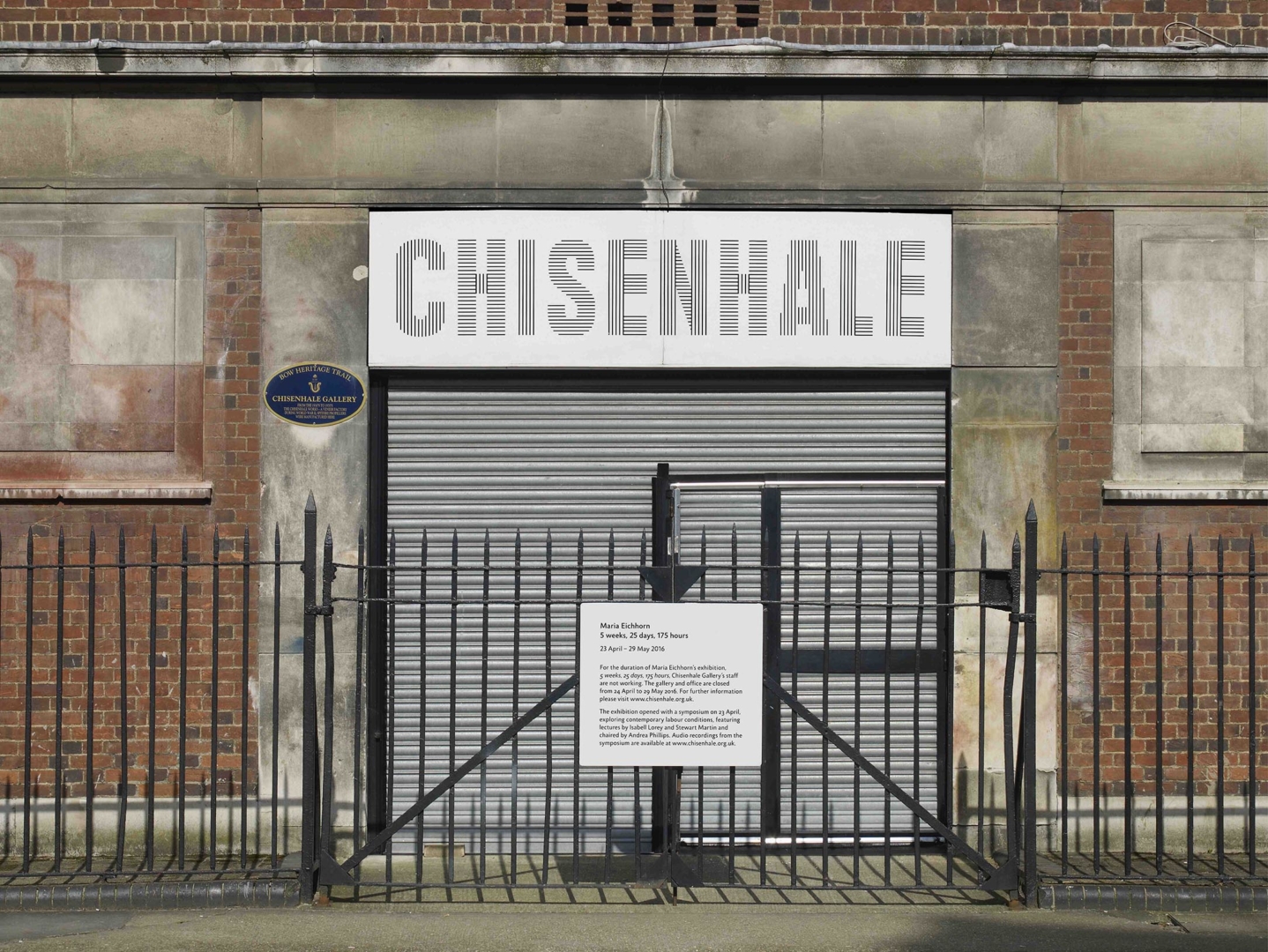
For another exhibition, 5 weeks, 25 days, 175 hours at Chisenhale Gallery, London (22 April – 29 May 2016), Eichhorn organised a one-day symposium examining contemporary labour conditions before requesting that the gallery’s staff withdraw their labour for the remaining five weeks of the exhibition, closing the gallery and office for this duration. While on leave, Chisenhale’s employees received full pay and were not assigned any tasks other than to not work for the gallery during this time, with the gallery’s phones going unanswered and emails being deleted (except for a dedicated account, checked externally on Wednesdays). Unlike in Marlie Mul’s Cancelled Exhibition, Eichhorn stipulated that the empty gallery should not be used for other purposes during this closure, “not rented for profit or otherwise capitalised, nor turned over for socially engaged good works”. She says of the work, “The institution itself and the actual exhibition are not closed, but rather displaced into the public sphere and society”. Available to the public, a PDF containing interviews with the staff from the project’s development, along with an audio recording of the symposium and its speakers’ papers, were published on the website.
While it is easy to point out problems, finding practicable solutions to these problems is much more challenging, especially when working from the bottom up. Is there something worthwhile to be found in outlining our struggles? Or is it simply choosing to dwell on the negative? Considering “gestures of expenditure”, Jan Verwoert proposes that “the deliberate exhibition of exhaustion in art or writing deprivatises exhaustion by exposing it as an experience that may be shared. The exhibition of exhaustion produces public bodies.” Through communication, he says, “we build forms of communality”.